
Tensile Membrane Structure
Tensile Membrane Structures in India: Design, Fabric and Applications
A tensile membrane structure can provide shelter from India’s sun and seasonal rain while keeping a space open and visually light. Made from a tensioned fabric membrane supported by steel frames, cables or masts, it can be designed for projects ranging from a small entrance canopy to a large roof. Archway Tensile designs and manufactures membrane structures for residential, commercial and public spaces.
Designs for different spaces
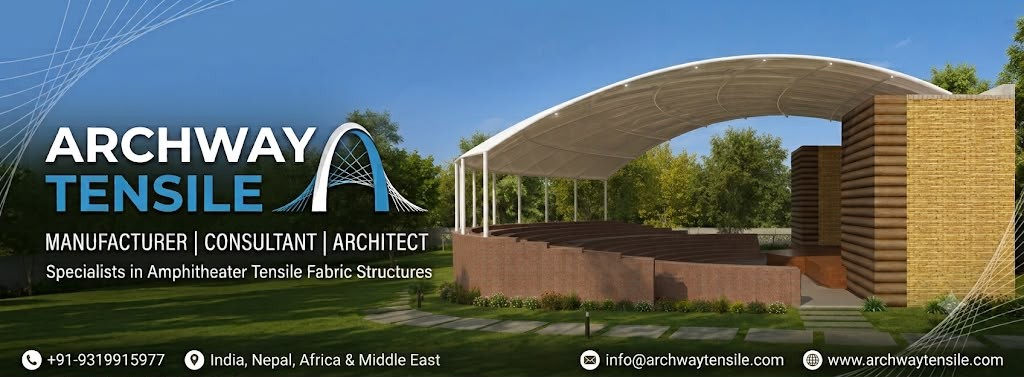
The shape of a tensile membrane structure is chosen to suit its purpose, site and surroundings. Common forms include curved roofs, arches, cones, wave shaped canopies and saddle shaped membranes. These forms can create a striking architectural feature, but they also help determine how the structure spans an area, directs rainwater and responds to wind.
A tensile membrane canopy can cover an entrance, walkway, courtyard or outdoor seating area. A tensile membrane roof may be designed for a larger gathering space, where clear sightlines and fewer internal supports are useful. Modular tensile membrane structures use repeatable units to cover areas in stages or accommodate a particular site layout. Each design needs to account for the available space, support positions, drainage and how people will use the area.
Fabric and material choices
The membrane affects the structure’s appearance, light, shade and maintenance needs. PVC coated polyester is used in many tensile projects because it can be fabricated into different shapes and is available in a range of colours. PTFE coated glass fibre fabric may be considered for projects with specific performance requirements. Shade fabrics can be suitable where filtered sunlight and airflow are priorities.
The right material depends on exposure, expected use, desired service life, cleaning requirements and budget. Fabric specifications and warranties vary, so it is worth reviewing them with the manufacturer before deciding. The membrane must also work with the structure’s frame, cables, connections and method of tensioning.
Technology, manufacturing and installation
A well planned tensile membrane structure starts with a site assessment and accurate measurements. Designers develop the membrane geometry, support positions and connection details. Digital modelling and structural analysis help evaluate fabric tension, wind loads, drainage and the supporting frame. This coordination is important because the membrane, steelwork, cables and foundations function as one system.
After the design is approved, the membrane is patterned and cut into panels to match the planned shape. The panels are joined using a method suitable for the selected fabric. Steel frames, masts and fittings are fabricated separately. During installation, the supports are secured before the membrane is attached and tensioned. Careful installation helps the structure achieve its intended form and perform as designed.